

Imagine you owned a beautiful home where you found peace and contentment living there for many years. Suddenly, one day without warning or provocation, you found yourself with an uninvited and unwanted inhabitant invading the premises.
When someone we love dies, the brain becomes a house where grief takes over and sets up residence. It can feel as though our well-used furniture has been rearranged in the dark. We reach for a light switch, but it is no longer there, and we trip over the enormous emptiness left behind. This isn’t just sadness; it is a biological crisis where the mind struggles to map out a world that no longer contains a vital piece of its landscape.
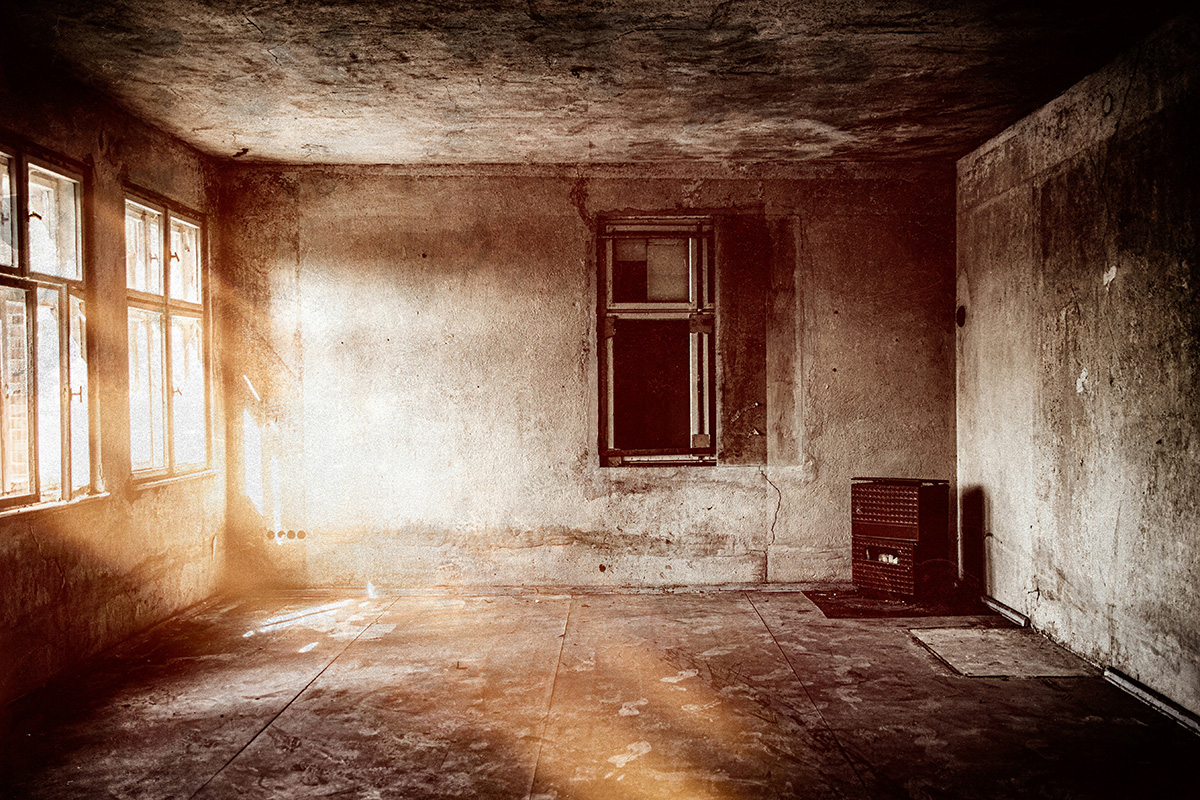
Grief is a structural renovation of our psyche. It doesn’t leave the house; it moves from the front doorway to a permanent, quiet room somewhere not visible to the naked eye, emitting a steady mournful melody wafting through the shadows.
As it moves at will, with a mind of its own, the restless heart will saunter and linger, taking its own precious time to travel from room to room. To describe grief as sauntering is to capture its cruel, leisurely pace — the way it refuses to rush, lingering in the hallways of the mind with an uninvited and persistent ease. Unlike a storm that breaks, a sauntering grief wanders through the mundane details of your days. When grief relocates, it takes its time to settle as it migrates, from a loud crisis to quiet corners. It suggests a sorrow that is neither frantic nor fleeting, but one that has made itself at home, moving with a rhythmic, lyrical persistence that mirrors the long shadow of an enduring absence.
Trying to evict grief as an unwanted tenant is an unwinnable battle. It turns your inner life into a courtroom. The relocation begins to register and is felt — on the empty side of the bed, the agonizing “single” vote in the decision-making processes, and the adoption of your loved one’s quirks as a way to house their essence. It lives in the reflexive turn of the head to share a joke, only to find the words falling into a silence that no longer echoes. It is the phantom weight of a hand reaching for the passenger-seat door, a muscle memory that hasn’t yet learned to travel alone.
This transition is seen in the untouched stack of mail on the entryway table or the specific brand of tea still stocked in the pantry that no one else drinks. These small, daily surrenders are the quietest part of the relocation — the moments where the heart must learn to vote alone on a life that was meant to be a duet.
The “restless heart” is a profound image for grief — it captures that ceaseless, aching pulse of looking for someone who is no longer there. While the world asks you to find closure, the heart often prefers to wander through memories, refusing to sit still in a reality that feels incomplete. It is this very restlessness that transforms the physical silence into a melodic resonance, bridging the space between the weight of grief and the poetic resilience of the spirit. The grief of a restless heart is an unfinished symphony, an incomplete composition — not to be seen as a problem to solve, but as a song that refuses the comfort of a final chord. It lingers in the air, vibrating through the silence of a room where a voice used to live, held captive by a melody that cannot find its way to come “home.”
The heart does not simply break; it retunes itself. In this movement, the restless heart learns to beat in time with what is no longer there, transforming the silence of absence into a profound, melodic resonance.
This transition bridges the space between the weight of grief and the poetic resilience of the human spirit. Grief is not a static state, but a realignment — a shifting of love from the physical world into the internal architecture of memory. It is a symphony of the heart, where the sharp crescendo of loss eventually settles into a lyrical, enduring grace.
While the world waits for the music to stop, the heart continues its frantic, lyrical search for the missing notes. It plays on — not to find an ending, but because the song is the only bridge left to what was lost. The rhythm of the longing is a relentless, syncopated beat. It is the pulse that quickens at the sight of a familiar coat or the ghost of a scent in the hallway. This rhythm does not follow the steady metronome of time; it skips, it falters, and then it races, driven by the frantic hope that if the heart beats loud enough, it might finally summon back the harmony that has gone silent. It is the percussion of a soul that refuses to settle, keeping time with a shadow. The lyrical and emotive complexities of grief — treating those restless feelings not as something to be “fixed,” but as a profound, continuing rhythm of the heart.
You don’t “move on” in grief; you move with it. Your grief is no longer a ghost haunting your hallways; it is the very foundation of the new addition you are trying to build and may eventually learn to redecorate.
We often mistake the ache of a restless heart for a lack of healing, waiting for a silence that never comes. Yet, in the architecture of our absence, that very restlessness becomes the cadence of a love that refuses to be forgotten — a steady, pulsing rhythm of a soul finally learning to carry its own weight as a solo.